
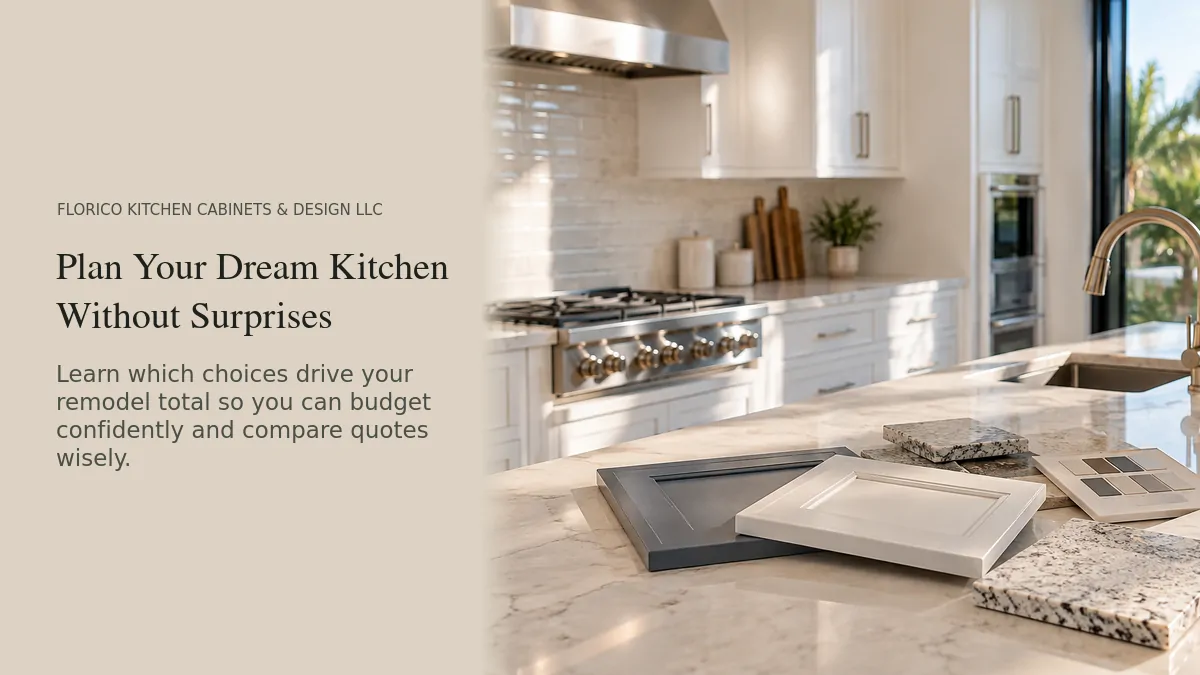
A kitchen remodel in Coconut Creek, FL has no fixed price. Your total depends on four things: your scope, your materials, whether plumbing or walls move, and what local contractors quote for your specific space. The most reliable way to find your number is to choose a scope level, list every cost category, and get itemized written quotes. Cabinets are usually the biggest variable, so it helps to review kitchen cabinets options early. This article walks through each cost category, the decisions that move your budget up or down, and the mistakes that cause overruns.
Why No Honest Article Can Give You One Number
Online "average cost" figures blend kitchens of very different sizes, finish levels, and regions. A small condo galley and a large open-plan kitchen in a single-family home can both be called "a kitchen remodel," yet they share almost nothing in cost structure. Coconut Creek adds its own variables: Broward County remodeling permits, Florida building code considerations, and the availability of local installers. That is why any kitchen remodel cost Coconut Creek homeowners see quoted online should be treated as a rough reference, not a budget.
Instead of anchoring to a national average, build your kitchen remodel budget from three inputs:
- Your scope level: cosmetic refresh, mid-range replacement, or full renovation.
- Your cost categories: the line items every kitchen project includes.
- Local written quotes: real prices for your measurements and selections.
Step 1: Define Your Scope Level
Scope drives cost more than any single material choice. Pick the level that matches your goals before you collect quotes.
Cosmetic Refresh
You keep the layout, cabinet boxes, and most appliances. Work may include refacing or painting cabinets, new hardware, a new backsplash, updated lighting, and possibly new countertops. This is generally the lowest-cost tier because no plumbing, electrical, or structural work moves.
Mid-Range Replacement
You replace cabinets and countertops within roughly the same footprint. You may also add new appliances, a sink and faucet, flooring, and lighting. Most homeowners who want a "new kitchen" without moving walls fall into this mid-range kitchen remodel tier.
Full Renovation
You change the layout. That can mean moving the sink or range, removing a wall, adding an island with plumbing, or upgrading electrical service. Costs rise because of permits, trade coordination, inspections, and the chance of finding hidden problems behind walls.
Decision criterion: If your current layout works and only the finishes feel dated, a mid-range replacement often delivers most of the visible improvement. Moving plumbing or walls is worth paying for only if the existing layout truly limits how you cook or move through the space.
Step 2: Understand the Cost Categories
Every quote you receive should account for these categories. If a quote leaves one out, ask about it.
- Cabinets: materials, construction, door style, finish, and installation. Cabinets are typically one of the largest line items.
- Countertops: material, square footage, edge profile, sink and cooktop cutouts, fabrication, and installation.
- Appliances: often bought separately by the homeowner, so confirm whether they are included.
- Plumbing and electrical: fixture swaps cost far less than relocation or new circuits.
- Flooring and backsplash: material plus surface preparation.
- Lighting: under-cabinet, recessed, or pendant fixtures, plus wiring.
- Demolition and disposal: removing and hauling away old materials.
- Permits and inspections: required for many electrical, plumbing, and structural changes. Check with the City of Coconut Creek or Broward County for your project.
- Design and project management: sometimes built into the price, sometimes billed separately.
- Contingency: money held in reserve for surprises.
Step 3: Know Where the Big Tradeoffs Are
Together, kitchen cabinet and countertop costs usually make up a large share of the total. Small decisions in these two categories can move your budget more than anything else.
Cabinets: Stock, Semi-Custom, or Custom
Stock cabinets come in standard sizes and cost less, but they may need filler panels in odd-shaped kitchens. Semi-custom cabinets offer more sizes and finishes. Custom cabinets fit the space exactly and cost the most. Tradeoff: in a standard rectangular kitchen, semi-custom often gives most of the fit benefit for less than full custom.
Countertops: Material and Layout
Material choice matters, and so does the countertop layout. Each seam, cutout, and decorative edge adds fabrication work. An L-shaped run with an island needs more slab and labor than a single straight wall. Comparing countertops by material, maintenance needs, and fabrication complexity helps you see where your money actually goes. Tradeoff: a simpler edge profile and fewer seams can lower cost without changing the material you love.
Layout Changes
Keeping the sink, range, and dishwasher where they are is usually the single biggest way to control cost. Each relocated fixture can add plumbing, electrical, venting, and permit work.
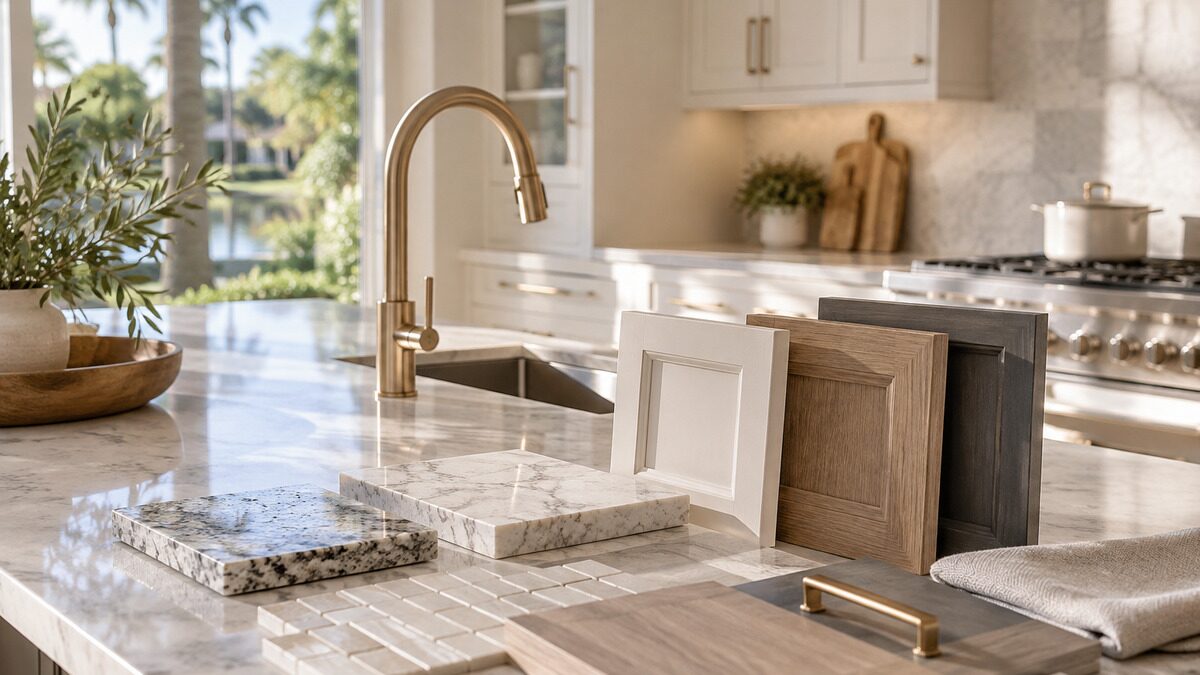
Illustrative Example: Building a Budget Framework
This is a hypothetical planning example, not a real customer project or a price quote. The dollar amounts are assumptions chosen to show the method and do not represent Coconut Creek market prices.
Imagine a homeowner with an L-shaped kitchen who wants new cabinets and countertops, keeps the existing layout, and reuses the current refrigerator. They set an assumed total ceiling of $40,000 and plan it like this:
- Set aside contingency first: they reserve 15% ($6,000) and leave it untouched, which leaves $34,000 to allocate.
- Collect itemized quotes: they get three written quotes that break out cabinets, countertops, installation, plumbing fixture swaps, backsplash, lighting, demolition, and permits.
- Compare line by line: one quote is lower overall but leaves out demolition and permits. Once those are added, it is no longer the cheapest.
- Adjust the biggest levers: the cabinet selection pushes the total over $34,000. They switch from custom to semi-custom cabinets and choose a simpler countertop edge, which brings the plan back under the ceiling.
- Lock selections before work starts: every finish is chosen in writing so mid-project changes don't eat the contingency.
The lesson is the process. Reserve the contingency, compare quotes that cover the same scope, and adjust the large-ticket items instead of trimming small details.
Common Mistakes That Blow Kitchen Budgets
- Comparing quotes with different scopes. A cheaper quote may simply leave out demolition, permits, or installation.
- Skipping a contingency. Older South Florida homes can hide water damage, outdated wiring, or subfloor problems behind cabinets.
- Changing selections mid-project. Change orders often cost more than the same choice made up front.
- Forgetting appliance dimensions. Choosing appliances after cabinets are ordered can force expensive modifications.
- Ignoring permits. Unpermitted work can create problems with inspections, insurance, or a future sale.
- Choosing materials on looks alone. Florida humidity and daily use should factor into cabinet and countertop decisions.
How to Get Accurate Local Quotes
Accurate kitchen remodel quotes start with clear information from you. Before contacting providers about your Coconut Creek kitchen renovation:
- Measure your kitchen and sketch the current layout, including windows, doors, and outlets.
- Write down your scope level and must-haves, such as an island, more storage, or a larger sink.
- Gather photos of kitchens you like so contractors can see your finish level.
- Request itemized written quotes from more than one provider.
- Ask each provider what is excluded, who pulls permits, and how they handle unexpected conditions.
- Ask about the expected timeline and the payment schedule.
Conclusion: Build Your Number, Don't Guess It
The realistic kitchen remodel cost Coconut Creek homeowners can count on is the figure that comes out of a defined scope, a complete list of cost categories, a protected contingency, and itemized local quotes. Keeping your layout, choosing cabinets that fit your space without overpaying for custom work, and simplifying countertop fabrication are the strongest ways to control your total. Your next step is to measure your kitchen, write down your scope and must-haves, and request a detailed quote. You can review cabinet and countertop options and reach the team through floricodesign.
Share this guide
Helpful answers
Frequently Asked Questions
Should I buy my own appliances or let the contractor supply them?
Either can work. If you buy them yourself, give the final model specifications to your designer before cabinets are ordered so the openings fit exactly. Also confirm who handles delivery, hookup, and removal of your old appliances.
Can I stay in my home during a kitchen remodel?
Many homeowners do. Plan for a temporary kitchen setup with a microwave, a small refrigerator, and a place to wash dishes, and expect dust and noise during demolition. Ask your contractor which phases will most disrupt water or power.
Is it smarter to remodel in phases to spread out the cost?
Phasing can work for cosmetic items like lighting or backsplash. It works poorly for cabinets and countertops, because countertops are fabricated to fit installed cabinets. Doing both together usually avoids paying for the same work twice.
Are financing options available for a kitchen remodel?
Some remodeling companies offer or point customers to financing. Ask about terms, total repayment cost, and eligibility before you commit. Compare any offer against your own savings or other lending options.
How far in advance should I start planning?
Start planning before you want work to begin, because design, selections, ordering, and permits all take time. Ask providers for their current lead times on cabinets and countertops, since these often set the overall schedule.