

To choose a kitchen remodeling contractor in South Florida, ask these key questions before you sign: Can I verify your Florida license on the DBPR website? What insurance do you carry? Who pulls the permits? What exactly does the written scope include? How are payments tied to milestones? How do change orders work? What does the warranty cover? Compare every answer in writing. The 12 questions below cover these points and the pressures specific to South Florida: humidity, hurricane season, condo association rules, and strict county permitting. A contractor who answers vaguely on any of these is a risk, however good their photos look. The questions also show how a company handles specific products, such as kitchen cabinets, where material choice affects how well they hold up in a humid climate.
Why South Florida Kitchen Remodels Need Extra Scrutiny
Licensing, insurance, permits, a written scope, milestone payments, change orders, and warranty coverage are the core issues to settle with any contractor. In Miami-Dade, Broward, or Palm Beach County, local conditions raise the stakes on each of them:
- Humidity and salt air can warp low-grade cabinet boxes and corrode hardware, so humidity-resistant kitchen cabinets are worth the investment.
- Permitting for plumbing, electrical, and structural changes is enforced by local building departments. Miami-Dade, Broward, and Palm Beach each follow their own county or municipal process.
- Condo and HOA rules often limit work hours, elevator use, and debris removal, and they may require their own approval.
- Hurricane season (June through November) can delay deliveries and inspections.
The questions below are grouped by the risk each one reduces. Ask all 12 of every contractor you are seriously considering.
Credentials and Accountability
1. Are you licensed in Florida, and can I verify it?
Florida requires state or local licensing for many construction trades. Ask for the license number and look it up yourself on the Florida Department of Business and Professional Regulation (DBPR) website. The lookup takes only a few minutes. Check that the name on the license matches the company on the contract.
2. What insurance do you carry, and will you send certificates?
Ask for proof of general liability and workers' compensation coverage. Without it, you could be liable if a worker is hurt in your home. Ask for the certificate to come directly from the insurer.
3. Who will actually do the work?
Many remodelers use subcontractors for plumbing, electrical, or countertop fabrication. That is normal, but you should know who is in your home and who supervises them. Ask who your day-to-day contact will be.
Permits, Rules, and Scope
4. Who pulls the permits, and which ones does this job need?
The contractor should pull the permits, not you. If a contractor asks you to pull an "owner-builder" permit, legal responsibility can shift onto you. Get a list of expected permits and inspections in writing.
5. Have you worked under condo or HOA rules like mine?
If you live in a condo, ask whether the contractor has handled association approvals, insurance requirements, and restricted work hours. A condo remodel goes more smoothly when the contractor reviews your association's rules before quoting.
6. What exactly is included in the scope, and what isn't?
Get a line-item scope covering demolition, disposal, cabinets, countertops, backsplash, plumbing and electrical changes, appliance installation, painting, and cleanup. A vague bid such as "full kitchen remodel" makes apples-to-apples comparisons impossible.
Materials and Design
7. Which materials do you recommend for our climate, and why?
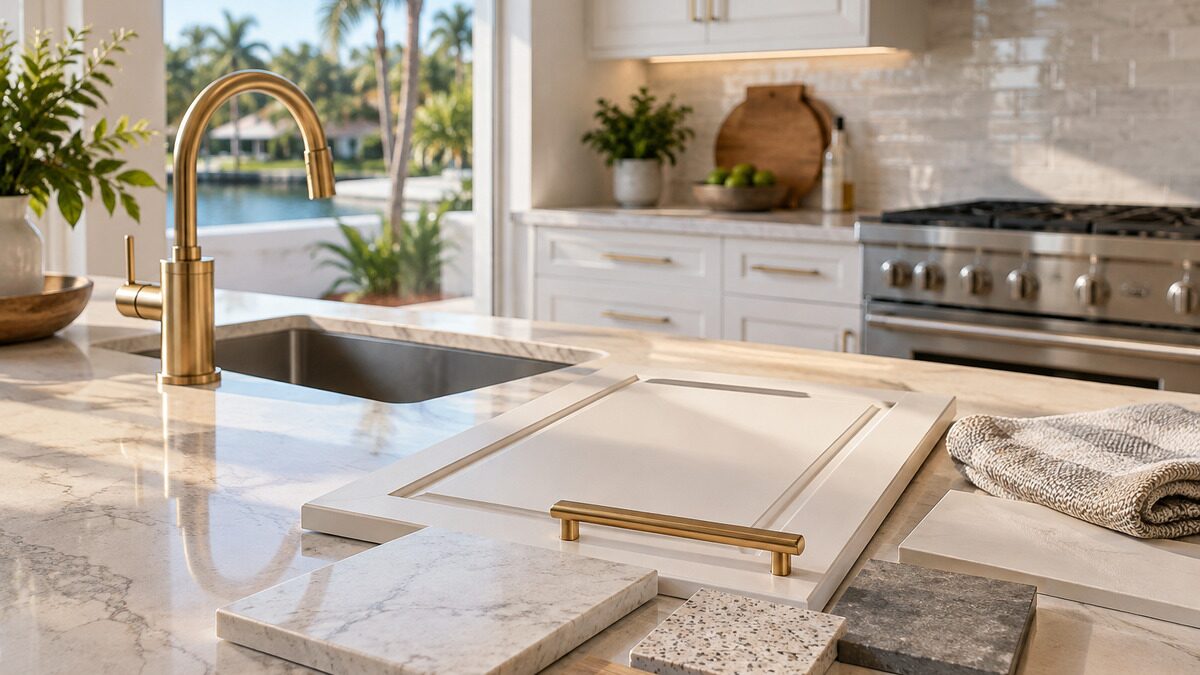
A good contractor explains tradeoffs. Plywood cabinet boxes generally tolerate moisture better than particleboard, but they cost more. Quartz countertops are non-porous and low-maintenance, while natural stone may need periodic sealing. Ask for brand names and product specs in the contract. Looking through options such as countertops before your meeting helps you ask sharper questions about durability and upkeep.
8. Can I see completed kitchens similar to mine?
Ask for photos of finished projects of a similar size and budget. If possible, get references from past clients you can call. When looking at past work, check seams, cabinet alignment, and how trim meets walls and ceilings.
Money and Timeline
9. What is the payment schedule?
Avoid paying most of the cost upfront. Tie payments to milestones such as demolition complete, cabinets installed, and final inspection passed. Florida law also regulates deposits on some residential contracts, so ask how the contractor's terms comply.
10. How do you handle change orders and surprises?
Opening walls can reveal water damage, outdated wiring, or termite activity. Ask how change orders are priced, approved, and documented. The answer should be "in writing, signed before work proceeds."
11. What is the realistic timeline, and what could delay it?
Ask for a start date, an estimated completion date, and the main risks to the schedule, such as cabinet lead times, inspection backlogs, or storm-related delays. Ask how they will communicate if the schedule slips.
After the Job
12. What warranty do you offer, and what does it cover?
Keep the contractor's workmanship warranty separate from the manufacturer warranties on cabinets, countertops, and appliances. Get the length and coverage in writing, along with the process for filing a claim.
Illustrative Example: Comparing Two Bids
This is a hypothetical scenario for illustration, not a real customer result.
A Broward homeowner gets two bids. Contractor A is noticeably cheaper, but the bid lists "cabinets and counters, installed" with no brands. It asks for a large upfront deposit and leaves the permits to the homeowner. Contractor B is higher, but it names the cabinet construction and countertop material and ties payments to milestones. It also includes permits and states a 30-day revision window for design changes.
Once the homeowner adds likely change orders and the risk of handling permits herself, Contractor A's savings shrink, and it remains the bigger liability risk. The lesson is to compare complete scopes, not headline totals.
Common Mistakes to Avoid
- Choosing on price alone without matching scopes line by line.
- Signing a contract with blank spaces or "TBD" materials.
- Skipping the license lookup because the website looks professional.
- Ignoring the association until work is scheduled, which can stall the project.
- Ordering cabinets before final measurements are verified after demolition.
A Simple Decision Process
- Shortlist three contractors and verify their licenses and insurance.
- Ask all 12 questions and record the answers in a spreadsheet.
- Request written, itemized bids based on the same scope.
- Call references and view past work.
- Read the full contract, payment schedule, and warranty before signing.
Conclusion
The right kitchen remodeling contractor in South Florida answers all 12 questions clearly and in writing, with details specific to the region's climate, permits, and association rules. Use those answers to compare complete scopes rather than prices alone.
As a next step, write down your must-haves and budget range. Then gather photos of kitchens you like and start conversations with your shortlisted companies. If you want to explore cabinet and countertop options with a local team, you can start by visiting Florico Design and bringing these questions to your first consultation.
Share this guide
Helpful answers
Frequently Asked Questions
How many quotes should I get for a kitchen remodel?
Three is a practical number for most homeowners. It shows you the typical range without overwhelming you. Make sure each contractor is quoting the same scope and materials.
Should I buy my own cabinets and have the contractor install them?
You can, but many contractors won't warranty the installation of materials they didn't supply, and coordinating measurements becomes your responsibility. If you buy your own, confirm in writing who is liable for sizing errors or damage.
Is a design-and-supply company different from a general contractor?
Often, yes. Some companies specialize in designing and supplying cabinets and countertops, while a general contractor manages the whole build, including permits and trades. Ask each company exactly which parts of the project it handles so that nothing falls between them.
Can I remodel during hurricane season?
Yes. Many projects in South Florida run year-round. Build buffer time into the schedule, and ask the contractor how they secure materials and the site if a storm approaches.