

There is no single price for a kitchen remodel in Coconut Creek, FL. As a rough planning starting point, a cosmetic refresh often lands in the low tens of thousands of dollars. A same-layout replacement of cabinets and countertops commonly runs from the mid-$20,000s to $70,000 or more. A full gut with layout changes can exceed six figures. These are broad ballparks, not quotes. Your actual kitchen remodel cost in Coconut Creek depends on whether you are refreshing finishes, replacing cabinets and countertops in the same layout, or gutting the room and moving plumbing and walls. Cabinetry is usually the biggest variable you control. Box construction, door style, and whether you need full replacement or partial upgrades all shape the total, so it helps to review kitchen cabinets options early. This guide explains each cost layer and shows you how to build a written estimate you can actually rely on.
The Three Scope Tiers That Drive Your Budget
Most kitchen projects fall into one of three tiers:
- a cosmetic refresh, at roughly $10,000–$30,000
- a same-layout replacement, at roughly $25,000–$70,000
- a full remodel with layout changes, at roughly $70,000 and up
Several factors decide where you land within a tier:
- cabinet construction and finish
- countertop material and size
- how many trades the job needs
- whether plumbing, gas lines, or walls have to move
Decide which tier you are in before you collect quotes, so you can compare bids on equal terms. This choice shapes your kitchen remodel budget more than any other decision.
The ranges below are general planning ballparks for a typical single-family or condo kitchen. They are not quotes. Material prices, kitchen size, and site conditions can push your project above or below them, so confirm your numbers with itemized local estimates.
Tier 1: Cosmetic Refresh (roughly $10,000–$30,000)
A cosmetic kitchen refresh keeps the layout and the cabinet boxes. It can include:
- refinishing or refacing cabinets
- new hardware
- a new backsplash
- a new faucet
- possibly a countertop replacement
This tier fits kitchens with solid cabinet boxes and a layout that already works. A countertop replacement or full refacing usually pushes a project toward the upper end of the range.
Tier 2: Mid-Range Replacement, Same Layout (roughly $25,000–$70,000)
This tier replaces the cabinets and countertops but keeps the sink, range, and refrigerator roughly where they are now. It often includes new flooring, new lighting, and an appliance upgrade. Many homeowners planning a Coconut Creek kitchen renovation land here. It changes the look and function of the room without the cost of relocating utilities.
Tier 3: Full Remodel or Layout Change (roughly $70,000 and up)
This tier involves moving walls, relocating plumbing or gas lines, adding an island with a sink, or opening the kitchen to the living area. It usually requires:
- permits
- engineering for load-bearing walls
- more trades on site
Changing the layout is the most expensive of the three tiers, and large or high-end projects can exceed six figures. These projects also carry the most risk of surprises.
Local Factors That Push Coconut Creek Costs Up or Down
National "average cost" figures mix very different projects, from small cabinet-door swaps to luxury metro renovations, so they say little about your kitchen. Within the tier you choose, these local factors shape where your project lands:
- Permitting and inspections. Electrical, plumbing, and structural changes generally require permits through the city or Broward County. Permit fees and inspection scheduling add both cost and time to the project.
- Condo and HOA rules. Many Coconut Creek communities limit work hours, debris removal, and contractor access. Some require association approval before work starts.
- Humidity. Cabinet materials, adhesives, and finishes need to hold up in a humid climate. Moisture-resistant boxes can cost more upfront and save money on replacements later.
- Existing conditions. Older homes may hide outdated wiring, cast-iron drains, or uneven subfloors. These problems often show up only after demolition.
So the better question is not "what's the average?" It is "what will my scope cost here?"
Where the Money Goes: Major Cost Categories
The share each category takes varies by project. The rough percentages below are common planning assumptions for a Tier 2 or Tier 3 budget. They are not fixed rules.
Cabinets (often around 30–40% of the budget)
Cabinets are commonly the largest line item in Tier 2 and Tier 3 projects. Several choices drive kitchen cabinet costs:
- Box material. Plywood generally costs more than particleboard but resists moisture better.
- Door style and finish. Shaker, slab, and raised-panel doors are priced differently. Painted or specialty finishes usually add cost.
- Construction type. Semi-custom and custom sizing reduce filler pieces but raise the price.
- Accessories. Soft-close hardware, pull-out organizers, and specialty inserts add up per unit.
Countertops (often around 10–15%)
Several factors affect countertop price:
- the material you choose
- square footage
- edge profiles
- cutouts
- seam count
Quartz, granite, and other stones sit at different price points, and a large island slab can require a premium piece. Browsing countertops by material helps you set a realistic line item before you request quotes.
Labor and Installation (often around 20–35%)
Labor covers demolition, cabinet installation, countertop templating and setting, plumbing and electrical hookups, and finish carpentry. Labor costs rise when more trades are involved and more scheduling is required, which is why Tier 3 projects sit at the high end of this range.
Appliances
Appliance costs range widely depending on brand and features. Upgrading to a larger range or a built-in refrigerator can also force changes to cabinets, ventilation, or electrical service.
Flooring, Backsplash, and Lighting
These are smaller line items individually, but they add up. Under-cabinet lighting and new circuits often require an electrician.
Contingency (roughly 10–20%)
Set aside roughly 10–20% of the project cost for unknowns. This is a common planning assumption, not a rule. Older homes and Tier 3 projects belong at the higher end of that range.
Living Costs During the Project
Whether you can continue living at home during the remodel affects your real budget. If you stay, plan for a temporary kitchen setup and extra spending on takeout or simple meals. If the scope or HOA rules make staying impractical, temporary housing becomes its own line item. Either way, longer timelines mean higher indirect costs, so factor them in alongside the contractor's estimate.
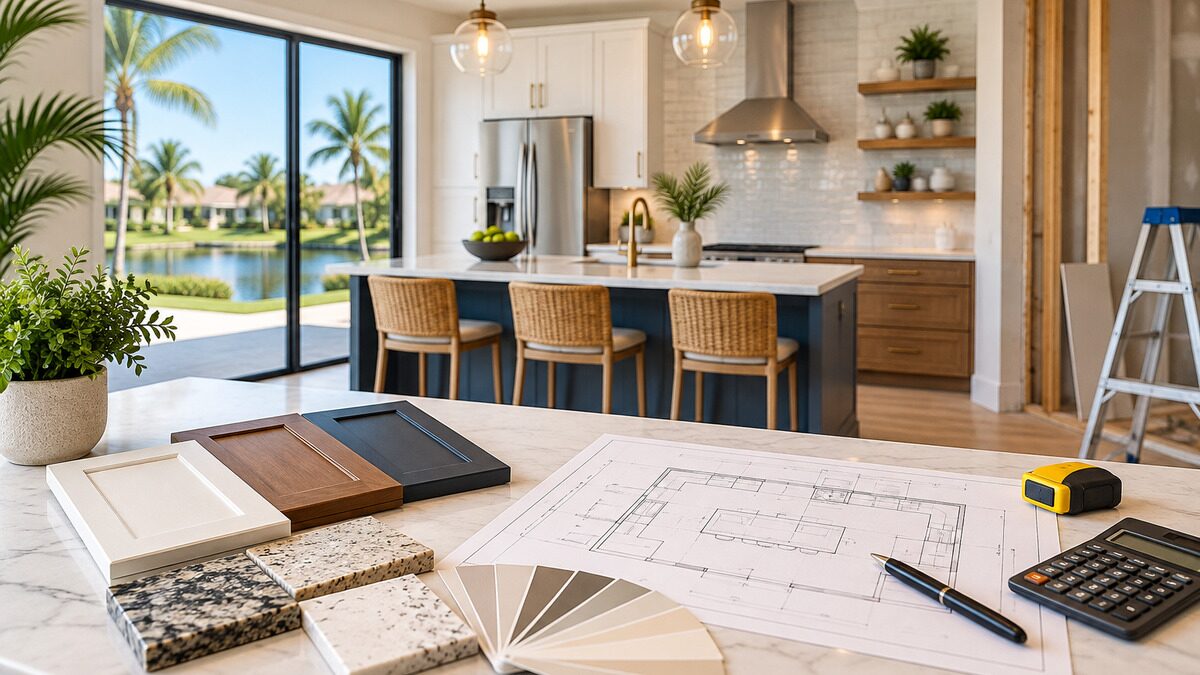
Illustrative Example: Building a Tier 2 Budget
This is a hypothetical scenario to show the budgeting process. It is not a real customer project or a price quote.
Imagine a homeowner with a 1990s L-shaped kitchen in Coconut Creek. They want new cabinets, quartz countertops, a tile backsplash, and LED lighting, and they plan to keep the sink and range in place.
Their process looks like this:
- Set the ceiling first. They decide on a maximum total spend and keep 15% of it aside as contingency.
- Rank priorities. Cabinets and countertops come first. Appliances will be reused for now.
- Compare itemized quotes like-for-like. They request itemized estimates (see the FAQ below for what each should cover). One bid looks cheaper, but it uses particleboard boxes and leaves out backsplash installation. Once those differences are accounted for, the bids are much closer.
- Lock selections before signing. Choosing door style, finish, and slab in advance prevents change orders later.
The result: they know exactly what is included and where the contingency sits. They can also see which trade-offs they made on purpose.
Common Budgeting Mistakes to Avoid
- Choosing by total price alone. The lowest total often reflects missing scope or cheaper materials rather than real savings.
- Changing the design mid-project. Change orders often cost more than getting the decision right upfront.
- Skipping contingency. Hidden water damage behind a sink cabinet is common in older homes.
- Underestimating lead times. Cabinet and slab lead times affect how long you live without a working kitchen.
- Ignoring HOA approval. Starting work before approval can cause delays or fines.
- Buying appliances last. Cabinet openings must match appliance dimensions, so choose appliances first.
How to Lower Costs Without Regretting It
- Keep the layout. Leaving plumbing and gas where they are is one of the biggest savings available. It is the main difference between Tier 2 and Tier 3 budgets.
- Spend on the parts you touch daily. Put money into cabinet boxes, drawers, and countertops, and save on decorative extras.
- Mix materials. Use a premium surface on the island and a more economical one on the perimeter.
- Look at finished work. Reviewing a gallery of completed kitchens helps you decide on a style quickly, which reduces design revisions.
- Ask about payment options. If spreading payments would let you afford better materials, ask whether financing is available, and review the terms carefully.
Conclusion: Build Your Budget From Scope, Not Averages
A realistic Coconut Creek kitchen budget starts with choosing a scope tier. A cosmetic refresh, a same-layout replacement, and a full layout change fall into very different price ranges. From there, put cabinets and countertops first, insist on itemized quotes, and hold 10–20% in reserve. When you understand where the money goes, you can make deliberate trade-offs instead of reacting to surprise costs, and any quote you receive will be easier to evaluate.
As a practical next step, gather measurements and photos of your current kitchen and list your must-haves. Then explore cabinet and countertop options with floricodesign so you can request a detailed, itemized estimate for your project.
Share this guide
Helpful answers
Frequently Asked Questions
How long does a kitchen remodel take in Coconut Creek?
Timelines depend on scope, material lead times, and permit approvals. A cosmetic refresh might take a couple of weeks. A full remodel with layout changes can take much longer once ordering and inspections are included. Ask each provider for a written schedule that covers ordering lead times.
Can I continue living at home during a kitchen remodel?
Many homeowners do, especially for cosmetic refreshes and same-layout replacements. Setting up a temporary kitchen area with a microwave, small appliances, and a utility sink can help. Full remodels with layout changes are more disruptive because of dust, noise, and utility shutoffs, so ask your provider how long water, gas, or power may be off and check any HOA rules on work hours.
Do I need a permit to replace kitchen cabinets and countertops?
Replacing finishes alone may not require a permit. Electrical, plumbing, and structural work typically does. Rules change, so check with the City of Coconut Creek building department and your HOA before work begins.
Is it worth refacing cabinets instead of replacing them?
Refacing can make sense if the cabinet boxes are structurally sound, dry, and in a layout you like. If the boxes show water damage or the layout doesn't work, replacement is usually the better long-term value.
What should a written estimate include?
Ask every provider for the same itemized format so bids can be compared on equal terms. A written estimate should list:
- cabinets, including box material and door style
- countertops
- demolition
- disposal
- installation
- plumbing and electrical hookups
- permits
- the allowance for each finish
Any excluded item should be stated clearly so you can budget for it separately. A bid that omits any of these may look cheaper only because it covers less.