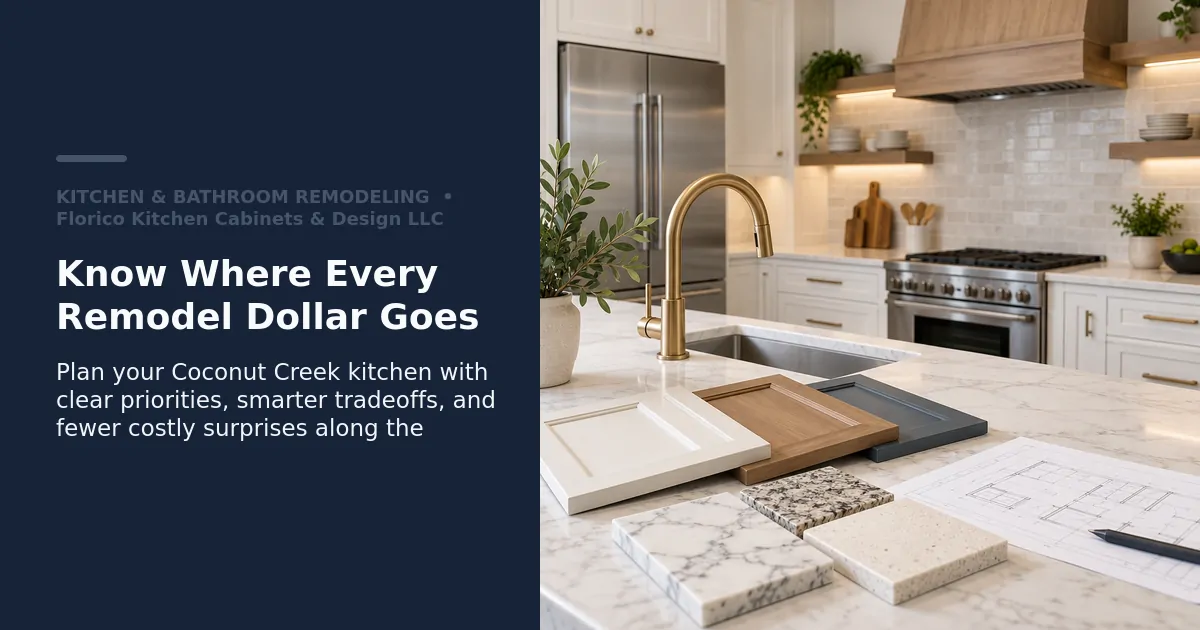

To choose a kitchen remodeling contractor in South Florida, verify their state license and insurance, confirm who pulls permits, and get a written scope, payment schedule, and timeline before you sign anything. Compare at least two or three contractors using the same questions so you can spot gaps, vague answers, or unusually low bids. This matters more here than in many regions because South Florida combines strict local building codes, humid salt air that is hard on materials, and busy permitting offices. Whether you're planning a simple refresh of your kitchen cabinets or gutting the whole room, the questions below help you protect your budget and your home.
Why Contractor Selection Is Different in South Florida
When you hire a kitchen contractor in Miami-Dade, Broward, or Palm Beach County, start with these core questions. What is your Florida license number? Who pulls the permits? Will you provide lien releases with each payment? How do your materials hold up in humid, coastal conditions? Each question ties to one of these local factors:
- Licensing is regulated at the state level. Florida licenses contractors through the Department of Business and Professional Regulation (DBPR). Some trades, like plumbing and electrical, need their own licensed professionals. Counties and cities may also require local registration.
- Permits are common for real remodels. Moving plumbing, adding circuits, changing walls, or replacing windows usually triggers permits and inspections. A cosmetic refresh, such as new cabinet doors or paint, may have different requirements, so confirm with your local building department. Kitchen remodel permits in Miami-Dade and Broward come with an added layer. Both counties fall within Florida's High Velocity Hurricane Zone, which has extra product-approval requirements for windows and exterior doors.
- Florida's Construction Lien Law affects you directly. Unpaid subcontractors or suppliers can file liens against your property even if you paid your contractor in full. How a contractor handles lien releases is a real risk factor.
- Climate affects materials. Humidity, salt air near the coast, and occasional flooding influence which cabinet boxes, finishes, and hardware hold up over time.
Questions About Licensing and Insurance
"What is your license number, and what type of license is it?"
Look up the number yourself using the DBPR's Florida contractor license lookup page (myfloridalicense.com). Check that the license is active, that the name matches the company on your contract, and that the license type covers the work. A cabinet installer or handyman may not be able to legally do structural, plumbing, or electrical work. Verifying the license takes only a few minutes and filters out many problems. You can also search the company name on Google to read reviews and look for recurring complaints. Treat reviews as a supplement to the license check, not a replacement for it.
"Who will actually do the plumbing and electrical work?"
Ask whether these trades are done by licensed subcontractors and whether they'll be named in the contract or permit. Vague answers like "my guy handles that" are a warning sign.
"Can you send your certificate of insurance?"
Request proof of general liability and workers' compensation coverage, or a documented exemption. A PDF can be edited in seconds, so have the certificate sent directly from the insurance agent rather than just forwarded by the contractor. That way you know it's current.
Questions About Permits and Inspections
"Which parts of this project need permits, and who will pull them?"
The contractor doing the work should normally pull the permits under their own license. Be cautious if a contractor asks you to pull an "owner-builder" permit for work they're performing. That can shift legal responsibility onto you.
"How do you handle inspections and failed inspections?"
Ask who schedules inspections, who must be present, and who pays for corrections if an inspection fails. The answer should be written into the contract.
"Will there be a Notice of Commencement?"
In Florida, a recorded Notice of Commencement is generally required before the first inspection for improvements above a certain dollar threshold. A contractor familiar with local permitting will explain the requirement without hesitation.
Questions About Scope, Materials, and Design
"What exactly is included, and what is excluded?"
A good written scope covers these items:
- Demolition and disposal
- Cabinets
- Countertops fabrication and installation
- Backsplash
- Plumbing fixtures
- Appliance installation
- Lighting
- Drywall repair and paint
- Flooring
Every item should be clearly marked as included or excluded. Exclusions aren't bad, but they need to be stated plainly so you can budget for them. Verbal promises that aren't in the contract are hard to enforce.
"Which materials and brands are specified, and what happens if they're unavailable?"
"Quartz countertop" isn't specific enough. Ask for brand, color, thickness, and edge profile. For cabinets, ask about box material, door style, drawer glides, and hinges. Agree in writing on how substitutions are approved.
"How do your materials perform in humid, coastal conditions?"
Ask about cabinet box material, finish durability, and hardware corrosion resistance, especially if you live near the water. Any experienced kitchen remodeling contractor in South Florida should have practical opinions here.
"Can I see finished projects similar to mine?"
Photos of past projects show style range and finish quality. Review a contractor's gallery or project portfolio before you invest time in a full bid. It helps you judge whether their typical layouts, detailing, and materials match your expectations. If possible, ask how long ago each project was completed, since a kitchen that still looks good after a few humid summers says more than a fresh install.
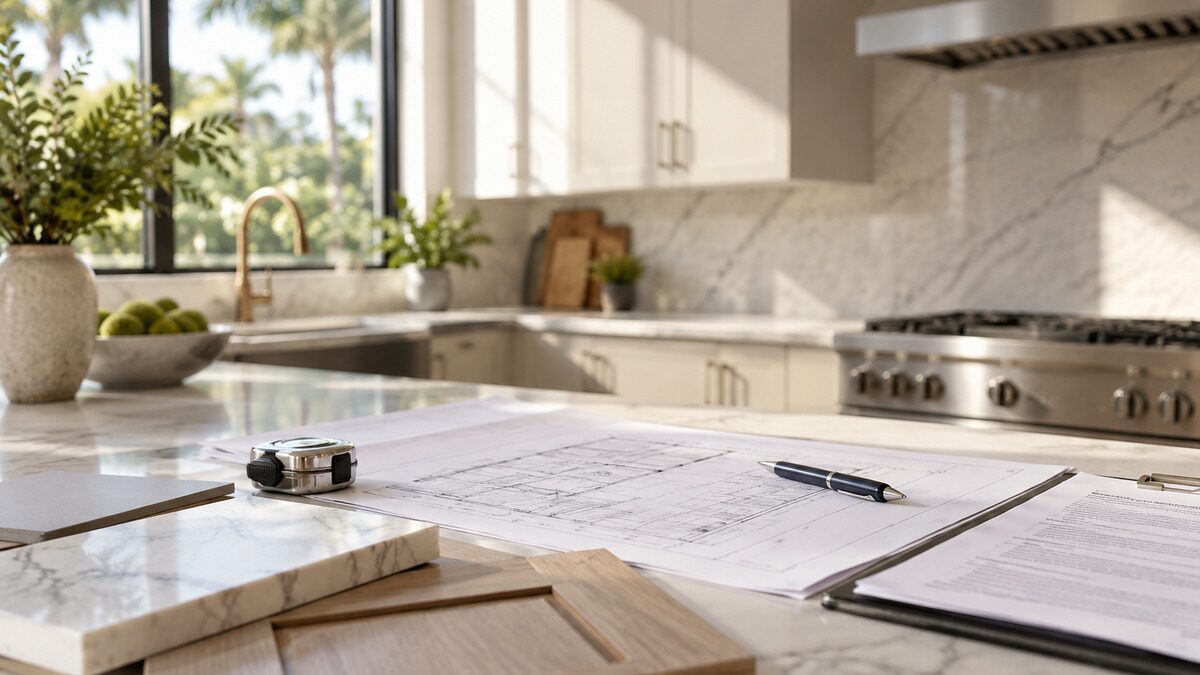
Questions About Money and Contracts
"What is the payment schedule?"
Payments should be tied to completed milestones rather than calendar dates. Front-loaded payments reduce your leverage if work stalls. Typical milestones include:
- Demolition complete
- Rough-in inspections passed
- Cabinets installed
- Final inspection passed
Florida law also places conditions on large deposits. A contractor who takes more than 10% of the contract price up front must generally apply for permits and begin work within set timeframes. Review the current statute or ask an attorney if you're unsure.
"How do you handle change orders?"
Every change should be written, priced, and signed before the work happens. Ask how change orders affect the timeline and whether there's an administrative fee.
"Will you provide lien releases with each payment?"
Request partial lien releases from the contractor and major suppliers or subcontractors as you pay. Under Florida Construction Lien Law, this is one of the most overlooked protections for homeowners.
"Do you offer or work with financing options?"
If you're considering financing, ask early so the payment schedule lines up with lender disbursements. Read the financing terms separately from the construction contract.
Questions About Timeline, Service, and Daily Logistics
- "What's the realistic start date and duration, and what typically causes delays?" Permit review, countertop templating and fabrication, and special-order items are common bottlenecks.
- "Who is my day-to-day contact?" Know whether you'll deal with the owner, a project manager, or the crew lead. Responsive communication is a large part of good service during a remodel.
- "What are your work hours, and how do you protect the rest of my home?" Ask about dust barriers, floor protection, debris removal, and any condo or HOA rules. Many South Florida condos restrict work hours and elevator use, and some require proof of insurance before work starts. Missing HOA or condo approvals can delay the start by weeks, so request them early.
- "What warranty do you provide, and how do you handle service calls after completion?" Get workmanship warranty terms in writing, separate from manufacturer warranties on cabinets, appliances, and stone. Ask who to contact if a door needs adjusting or a seam needs attention after the final payment.
Illustrative Example: Comparing Two Bids
This is a hypothetical scenario for illustration, not a real customer result.
A Broward County homeowner gets two bids for a kitchen remodel with new cabinets, quartz countertops, and a relocated sink.
- Bid A is noticeably lower. It lists "cabinets and counters installed" with no brands, doesn't mention permits, and asks for 50% up front.
- Bid B is higher. It names the cabinet line and countertop material, includes plumbing permits under a licensed plumber, excludes flooring in writing, and uses four milestone payments.
After asking the questions above, the homeowner learns Bid A doesn't include the plumbing permit, disposal, or backsplash. Once those are added as change orders, the price gap shrinks, and Bid A still carries more risk. The lesson is that low bids often leave items out of the scope rather than doing the same work for less. Compare scopes before you compare prices.
One More Mistake to Avoid: Finalizing the Design After Demolition
Late changes are the most expensive kind. Once walls are open and the crew is on site, a new cabinet layout or a different countertop selection can mean re-ordering, re-templating, and new change orders. Lock in cabinet layout and countertop selections before work begins, since special-order items can add weeks to the schedule.
Conclusion: Ask First, Sign Second
The right kitchen remodeling contractor in South Florida will welcome these questions. Without being asked twice, they should provide:
- A verifiable license number
- A clear permit plan
- A detailed written scope
- Milestone-based payments
- Lien releases with each payment
Use this list as a checklist during every consultation. Write down each contractor's answers and compare them side by side before you look at the final price.
As a practical next step, write out your project goals, including layout changes, cabinet and countertop preferences, and budget range. Bring that list and these questions to a consultation. If you're planning a kitchen update, you can start by exploring Florico Design to review their cabinet and countertop options and reach out with your project details.
Share this guide
Helpful answers
Frequently Asked Questions
How many quotes should I get for a kitchen remodel?
Two to three detailed quotes is a practical range. More than that often adds time without adding clarity. Give every contractor the same written project description so the bids are comparable.
Is a design-build firm better than hiring a designer and contractor separately?
Neither is automatically better. A single firm gives you one point of accountability and usually simpler coordination. Separate professionals can offer more design independence, but you'll have to manage communication between them.
What should I do if a contractor pressures me to sign the same day?
Decline politely and take the contract home to review. Legitimate contractors expect homeowners to compare bids and read terms. Same-day "discount" pressure is a common red flag. If they won't let you continue the conversation after you've reviewed the contract, consider that a sign to move on.
Can I buy my own cabinets or countertops and have a contractor install them?
Many contractors allow it, but ask how it affects warranties, scheduling, and responsibility for damaged or incorrect items. Some contractors won't warranty installation of materials they didn't supply.